What One Sold Out Lipstick Taught Me About E-Commerce
I pressed on the suitcase to close the corner of an overpacked bag for an International trip with my friends. I stood proudly once it was shut. Then it hit me, my Lakme Rosy Sunday lipstick was almost over and I had forgotten to buy a new one for the trip.
It was 9 PM and there was no way the outlets would be open till the time I reached. So I did what my generation does when panic sets in, opened Swiggy, BlinkIt, Zepto, BigBasket and scrolled through thousands of products to find that one particular shade of lipstick.
While I didn’t end up finding that shade anywhere (it was out of stock on all platforms), I did end up noticing something else entirely that piqued my interest. After coming back from the trip (where I btw managed with other lipsticks), I explored the beauty space on E-commerce and quick commerce platforms further and did what I later realised is called a “Brand Audit”.
How I Got Started
Instead of just scrolling randomly, I picked four broad types of beauty brands that kept appearing across platforms. Together, these four types of brands seemed to represent most of what shows up when you search for makeup online:
- A global mass makeup brand that dominates most marketplaces
- A legacy Indian beauty brand with decades of consumer trust
- A fast-growing D2C challenger brand that competes aggressively on price
- A mid-tier international brand that sits somewhere between mass and premium
But out of these, I found myself most curious about how a mid-tier international brand performs against the others. It doesn’t compete aggressively on price like many D2C challengers, it doesn’t have decades of legacy backing it, and it isn’t positioned as a mass market brand either. It made me wonder how a brand that sits somewhere in the middle carve out space for itself on crowded marketplaces.
To keep things manageable, I also narrowed the audit down to three core makeup categories that are searched frequently and behave very differently when it comes to buying decisions:
- Liquid Lipstick - a fast moving, impulse purchase category
- Kajal - a hero product driven category where one SKU often dominates
- Foundation - a more considered purchase where shade swatches are essential
Once I had those categories locked in, I started comparing listings across platforms on the basis of certain aspects such as catalogue size, reviews, pricing, content and visibility.
That’s when the interesting patterns started to emerge.
#1 Jo Dikhta hai, Vo Bikhta Hai
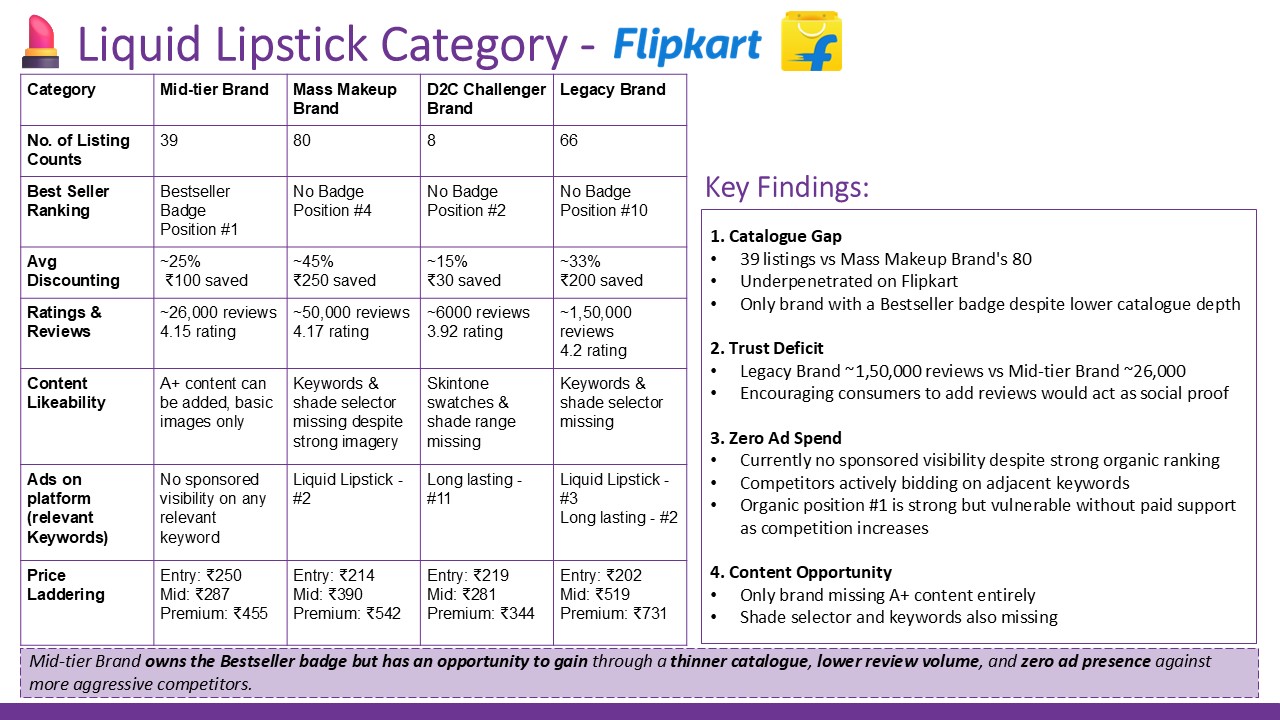
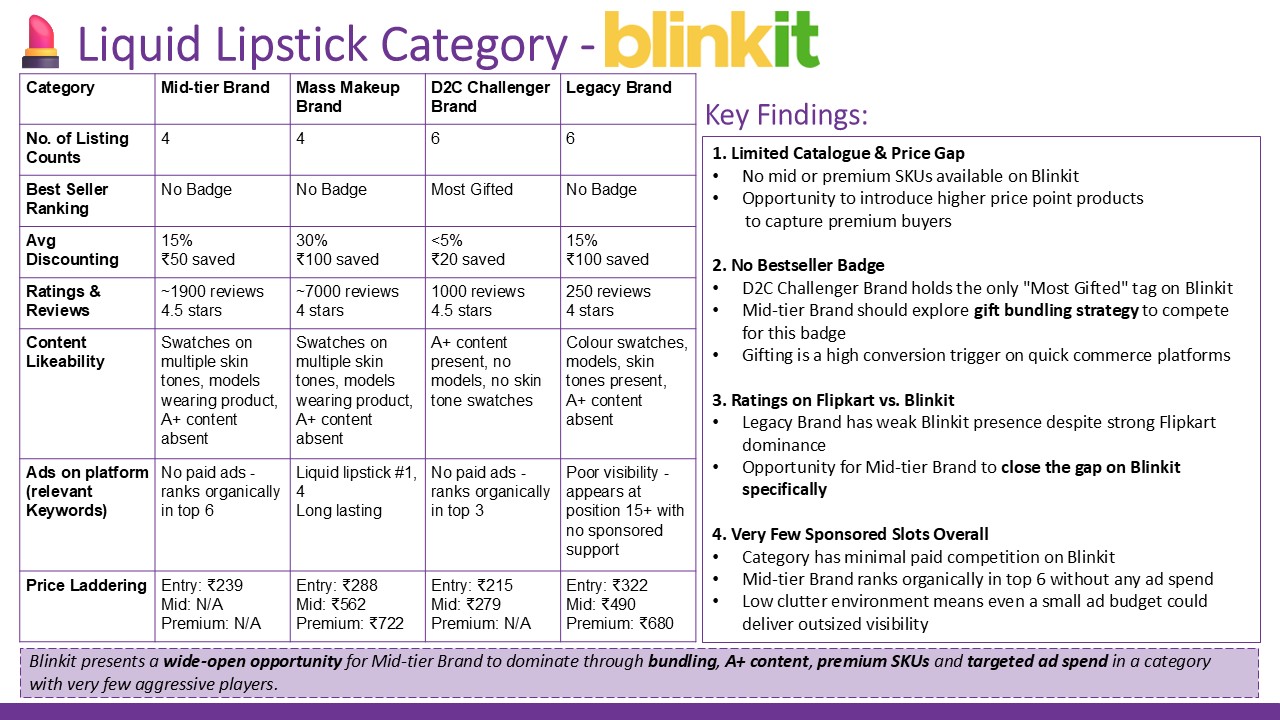
When you search for something like “liquid lipstick”, the first thing you notice is how many products appear from the same brand. Some brands simply show up again and again. Different shades, different finishes, slightly different variants but the same brand occupying multiple spots in search results.
It made me realise that visibility on marketplaces isn’t just about having one hero product. It’s also about how deep the catalogue goes. The more listings a brand has, the more chances it has to appear in search results. And the more it appears, the more familiar the brand starts to feel to the consumer.
I used to think visibility is a powerful advantage in retail outlets for FMCG products but this made me realise that it is an equally important factor even online.
#2 THAT'S WHAT SHE SAID!
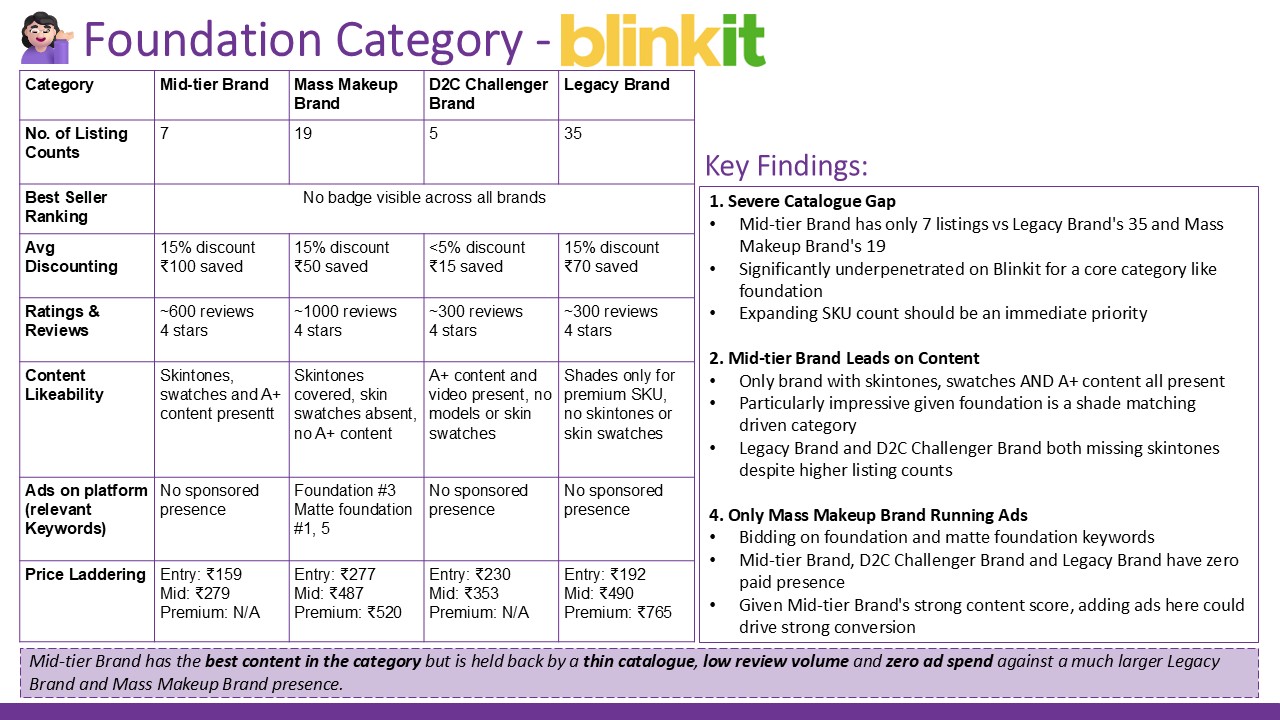
Like most people, I usually glance at the reviews while shopping online. But while scrolling through listings, something else became obvious. A product with 4.2 stars and 1,50,000 reviews felt far more trustworthy than one with 4.4 stars and a few thousand reviews.
The rating difference was tiny, but the review volume changed how credible the product felt.
Reviews act as social proof, and on marketplaces that social proof compounds over time. Brands that have been around longer naturally end up building a much stronger trust base. Which made me realise that reviews aren’t just a post-purchase metric. They’re actually one of the strongest long-term growth levers on marketplaces.
#3 Hashtag Sponsored
Another interesting thing I noticed was how some listings appeared right at the top with a small “Sponsored” tag. At first it’s easy to ignore, but after seeing it a few times you realise how strategic that placement is.
Even if a product is already popular, paid visibility helps protect its position in search results. Without it, competitors can easily start appearing above it. It’s a subtle reminder that what we see while browsing isn’t purely organic. There’s always a bit of strategy behind it.
But I have personally always avoided going for sponsored products because I am aware that the product has taken up a paid spot. It made me wonder whether other people also think in a similar manner or do they fall for it?
#4 Tenu suit suit karda?
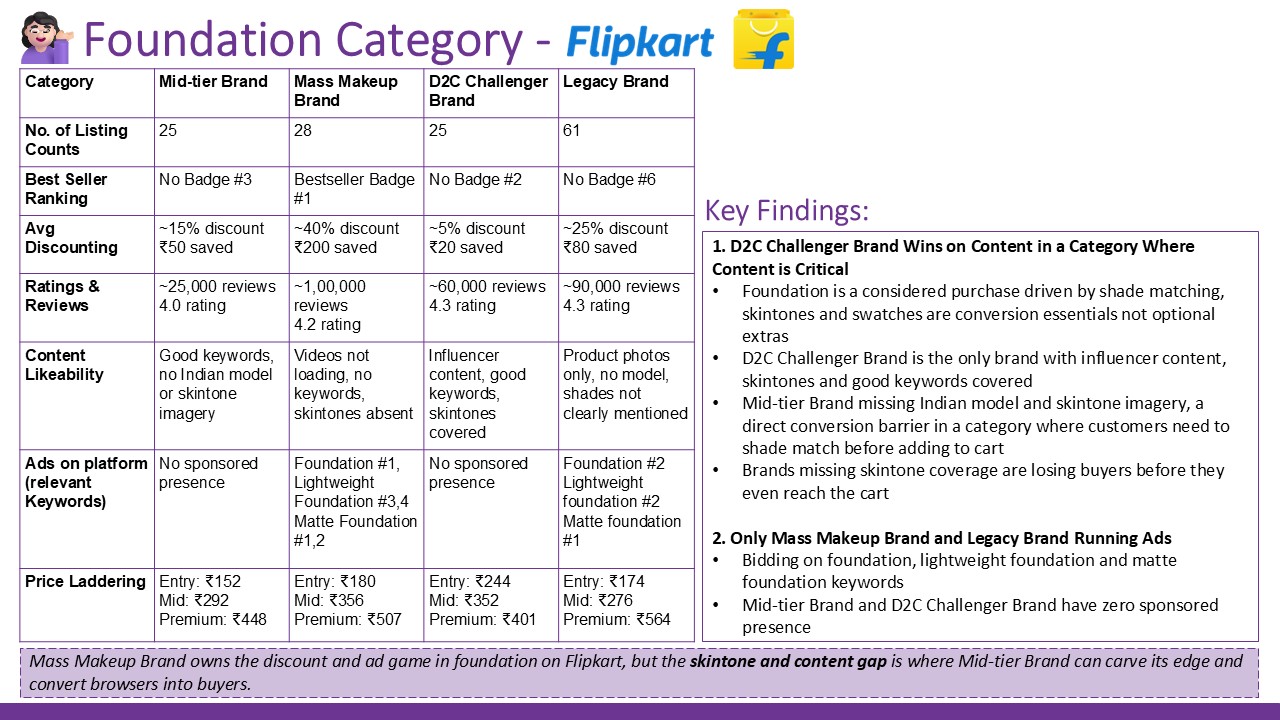
Some listings had just a product photo and maybe a swatch.
Others had:
- models wearing the shade
- multiple skin tone swatches
- close-up product textures
- application visuals
The difference in how informative the listing felt was huge. Especially in beauty categories where we try to imagine how a product will look on us, good content becomes the closest thing to trying the product in real life.
This was more prevelant in the lipstick and foundation category where the shade we buy plays a more important role and depends heavily on different skin shades. I realised shade swatches on different skin tones was something I actively looked for when buying either a foundation or a lipstick.
#5 Bundles Are Everywhere
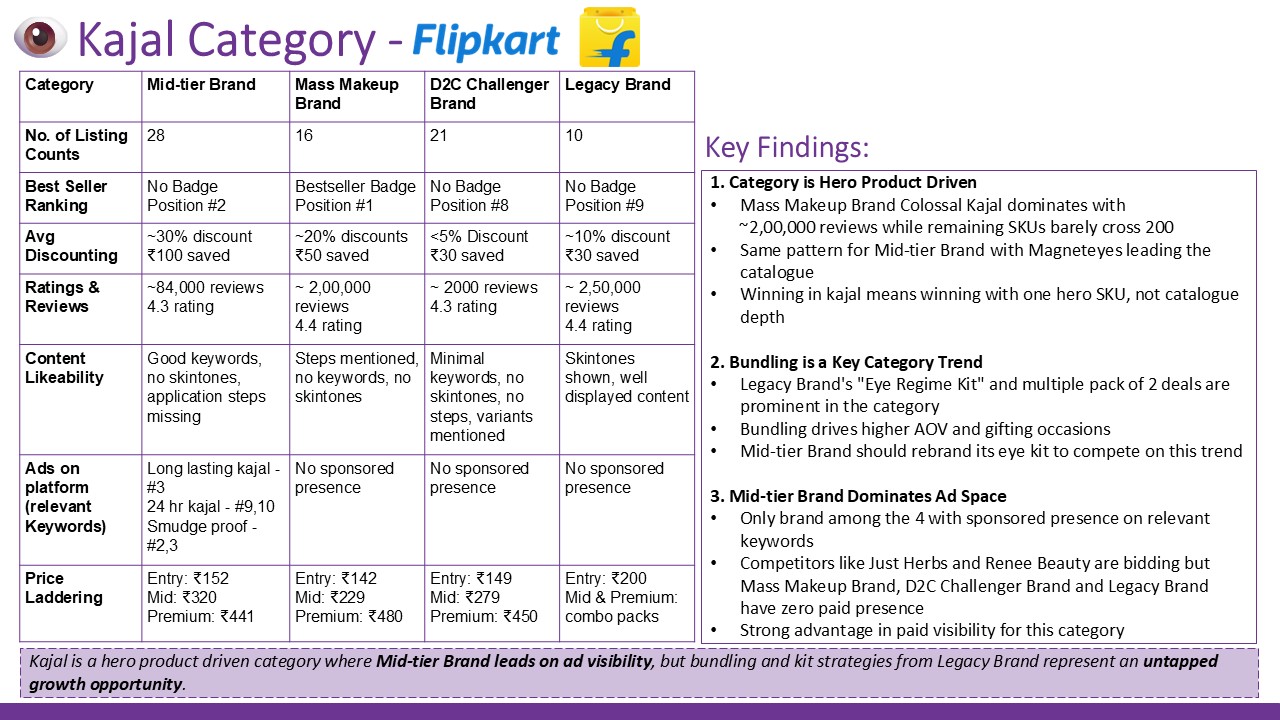
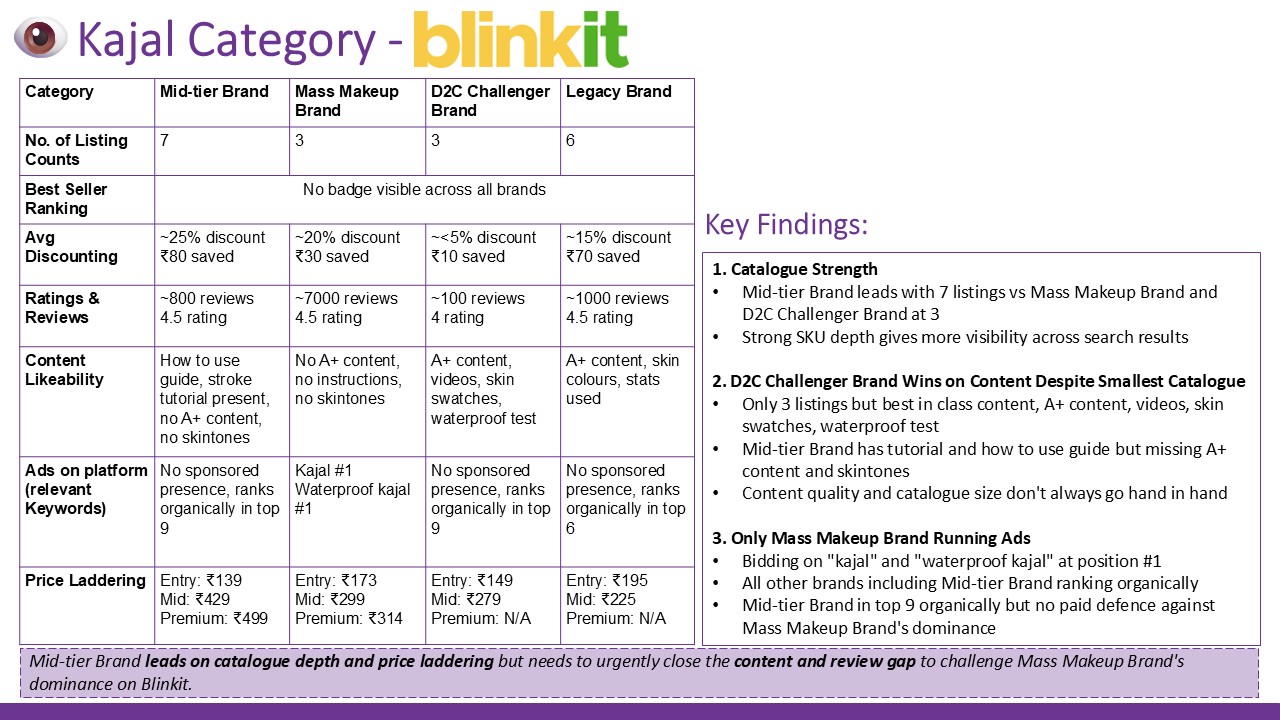
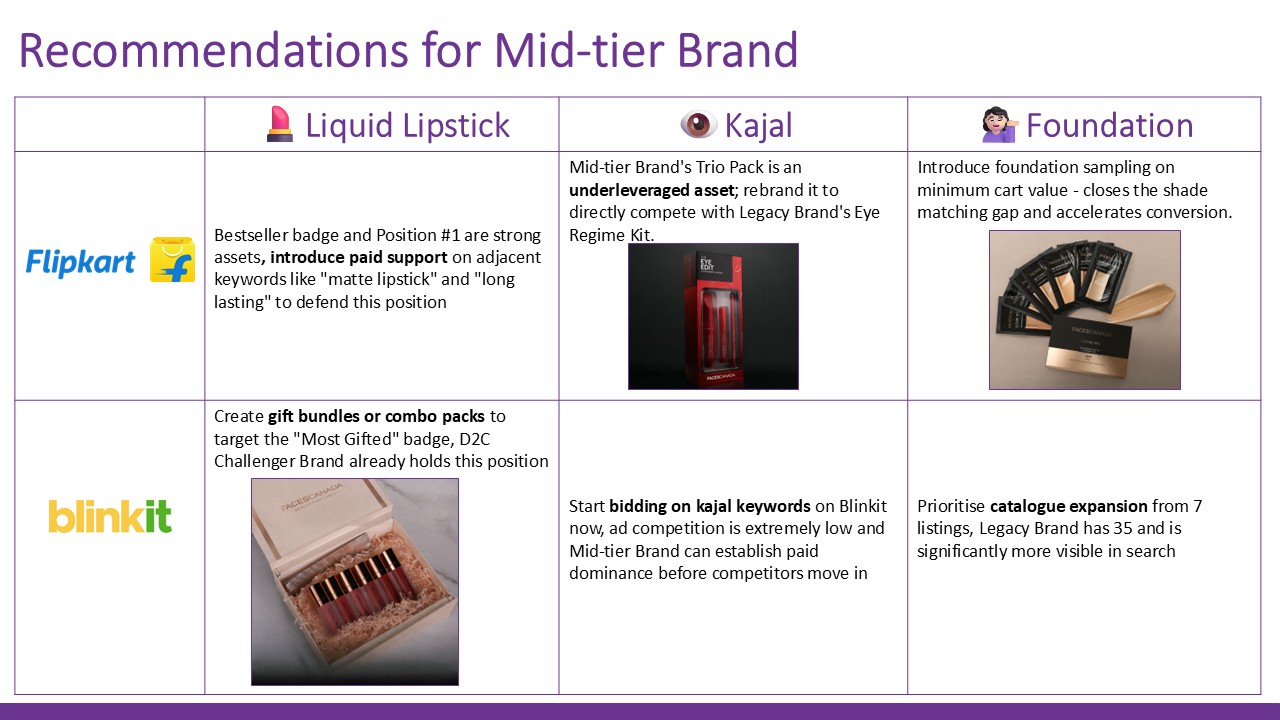
While I started out looking for lipstick, I ended up noticing this a lot in other categories like kajal.
Instead of just selling single products, some brands were offering:
- combo packs
- small kits
- bundled eye products
Which makes sense when you think about it. Bundles increase the order value, make the purchase feel like a better deal, and sometimes even turn a simple product into something giftable. Also, for newbies entering into the make-up world, too many brands can often feel daunting and I realised they would rather go with one brand offering a combo pack where they would get everything at one go.
Final Thoughts
And that’s how I continue to doomscroll even on non-social media apps. Just Kidding.
I realised there are a lot more factors that go into placing a specific product in a specific slot on any E-commerce or quick commerce platform. I think I would unintentionally be looking out for certain things now when I’m scrolling through these apps.
Until next time!